The cabinet box behind a kitchen door is usually structurally sound even in a kitchen that is twenty or thirty years old. The hinges, the shelves, the drawer slides, these components can all be updated. The door is what determines how the kitchen reads, and changing the door changes the kitchen.
Door replacement is one of the most cost-effective renovation approaches available for kitchens and storage spaces alike. The cabinet itself stays in place. Only the face of the installation changes, and that is exactly the face that defines the style.
Why the Door Profile Determines the Mid-Century Look
Flat-front doors are exactly the right profile for a mid century modern look, and there is no substitute. A five-piece shaker door, with its two vertical stiles, two horizontal rails, and recessed center panel, cannot be made to read as MCM regardless of its color or material. The frame is always visible, and visible framing belongs to a different design tradition.
A flat slab door, by contrast, can read as contemporary, Scandinavian, or mid century depending on the finish and the hardware chosen. The profile is the foundation. Everything else is adjustable. This is why door replacement for a mid century look starts with the profile decision before any material conversation begins.
Cabinet Doors for a Mid-Century Modern Kitchen
The cabinet doors that work for mid century modern are flat-front with no frame, no rail, and no routing on the face. The door should look like one flat piece of material with no extra details visible. Clean lines from edge to edge. The edge treatment is typically square or very slightly eased, finished with a material that matches the face.
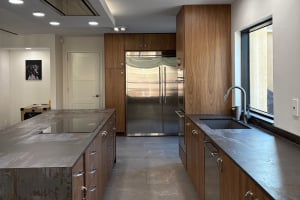
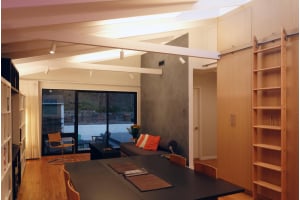
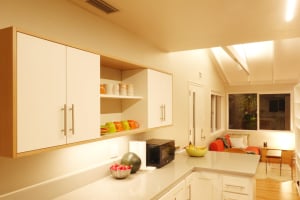
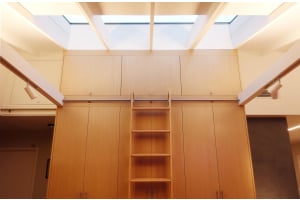
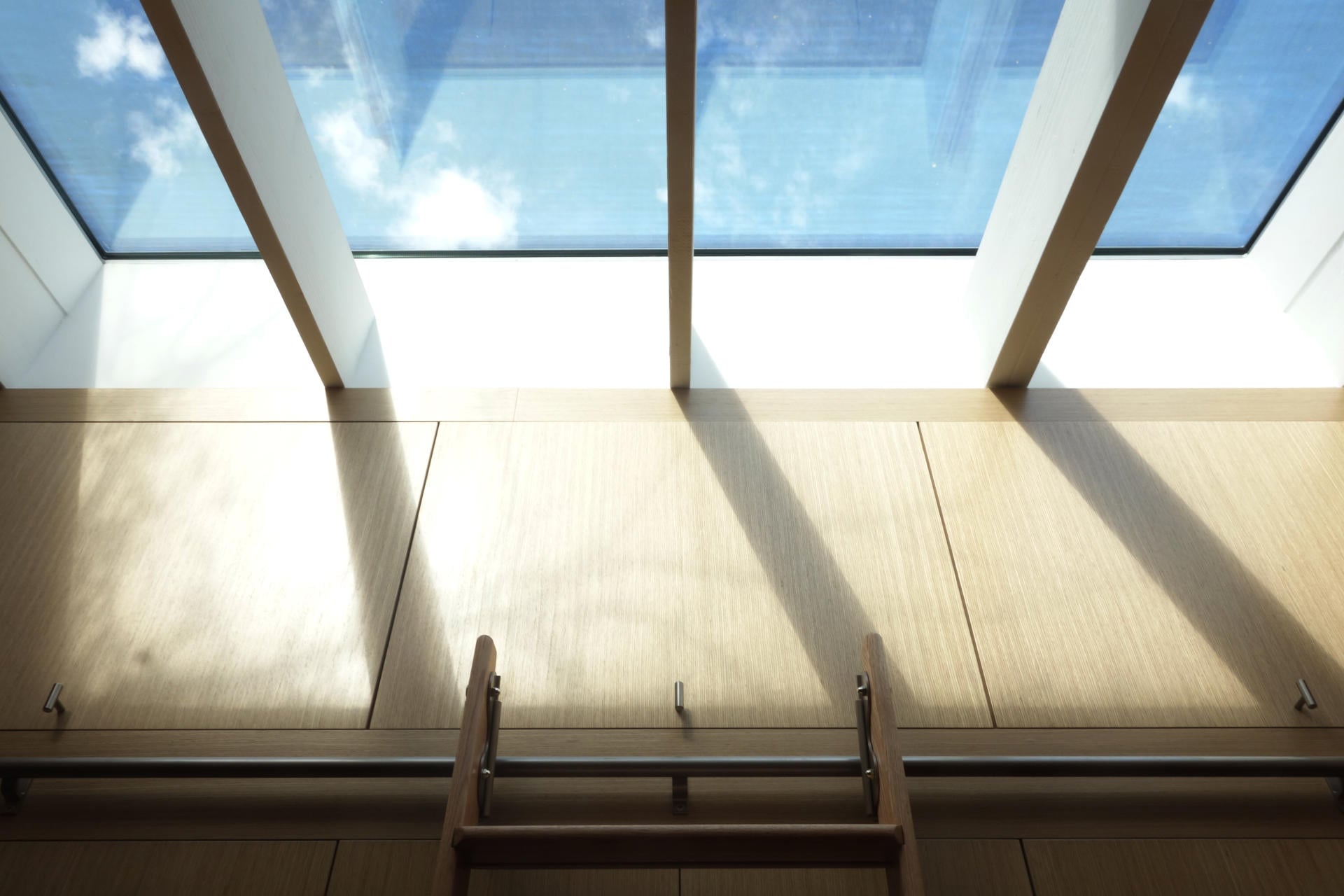
What this looks like in practice is demonstrated by the flat slab light oak doors in a real mid century home at 27eStore: consistent flat profile across every door in a floor-to-ceiling run, with the natural oak grain as the only visual variation. No separate panel, no routed channel on the face, no construction detail that interrupts the surface.
This is also the door style that ages most cleanly. With no decorative detail to go out of fashion, the flat slab door's relevance is determined entirely by the quality and character of the material. A wood veneer in good condition looks as current in fifteen years as it does today.
Material Options for Mid-Century Cabinet Door Replacement
Three material directions are most relevant for a mid century look. Real wood veneer is the most historically authentic option. The grain is genuine wood, the variation between panels is natural, and the way the surface responds to light across the day is something no printed surface replicates at close range. Light oak and walnut are the two wood tones most aligned with the MCM period.
HPL laminate offers a wider range of surface textures and consistent color across the full door run. It performs better in high-moisture environments and is well suited to kitchens where practical durability is the priority. The trade-off is that it lacks the natural grain variation that gives wood veneer its warmth.
Matte lacquer, whether in a custom color or a standard RAL reference such as RAL 9016 Traffic White, produces a clean, consistent surface that works well as a secondary finish alongside a wood veneer, or as the primary finish in a simpler, more graphic kitchen. The matte finish is important. Gloss lacquer pushes the room toward contemporary rather than mid century.
Mid-Century Cabinet Hardware
Hardware for mid century cabinet door replacement is straightforward: bar pulls in brushed nickel, matte black, or satin brass. Simple, functional, no decorative detail. Integrated finger pulls, a routed channel along the door edge instead of applied hardware, are the cleaner option when the goal is maximum restraint.
The hardware choice often determines which direction the door reads in. Matte black bar pulls read as contemporary. Brushed nickel reads as more neutral. Satin brass reads as warmer and more directly connected to the MCM material palette. None of these is wrong, they are different points within the same broad vocabulary.
Hardware consistency across the entire cabinet run matters. Mixing pull styles or finishes in the same installation reads as a mistake rather than an intentional detail. One hardware choice, applied consistently, is what makes a door replacement project look resolved rather than assembled from separate decisions.
How the Custom Door Ordering Process Works
Ordering custom replacement cabinet doors is more straightforward than most people expect. You measure the existing doors, note the hinge type and configuration, and submit the measurements. The doors are custom designed and made to those exact dimensions. No standard sizes to work around, no gaps to manage.
At 27eStore, the process is: send your door measurements, receive a quote based on per-square-foot pricing, approve, and the doors are produced to your specifications. The same process applies whether you are replacing two doors or an entire kitchen. IKEA cabinet boxes in particular are well suited to custom door replacement because the box dimensions are standardized and the hinge positions are consistent.
Lead time, current pricing, and the full finish range are available on the 27eStore website. The project scale does not change the process, only the number of doors in the order.
Frequently Asked Questions
Can you just replace old cabinet doors?
Yes. Cabinet door replacement without changing the boxes is a standard renovation approach and does not require structural work. The key is accurate measurement and confirming that the new doors will work with the existing hinge system. European-style frameless cabinet boxes accept a consistent hinge type that simplifies this considerably.
What can I use instead of cabinet doors?
Open shelving is the most common alternative and works well in a mid century kitchen context when used selectively. A curtain on a track is a softer option for a pantry or utility space. Neither replaces the practicality of a cabinet door for kitchen storage, but both have a place in a considered MCM kitchen layout.
How to make a cabinet look mid century modern?
The fastest change is replacing the door with a flat slab profile. If the existing door is already flat, updating the hardware from a decorative knob to a simple bar pull and repainting the door in a warm matte neutral covers most of the remaining distance. Mixing mid century cabinet doors with a more contemporary space is often more achievable than it appears, since the flat profile does not compete with most furniture styles.
The door profile and the material it is made from are separate but related decisions. What the doors are actually made from, including the core, the face material, and the edge treatment, affects both how they look and how long they hold up in use.